Strengthening Central American health care systems and promoting sustainable development.

Quarterly

Spring 2013

The arrival of our 20 year anniversary has caused me to pause, look back for a moment, and reflect. Over 30 years ago, as a Peace Corps Nurse, I witnessed many things which ended in death. Leaving my Peace Corps service I sat frustrated and defeated and I decided never to return.
Quarterly

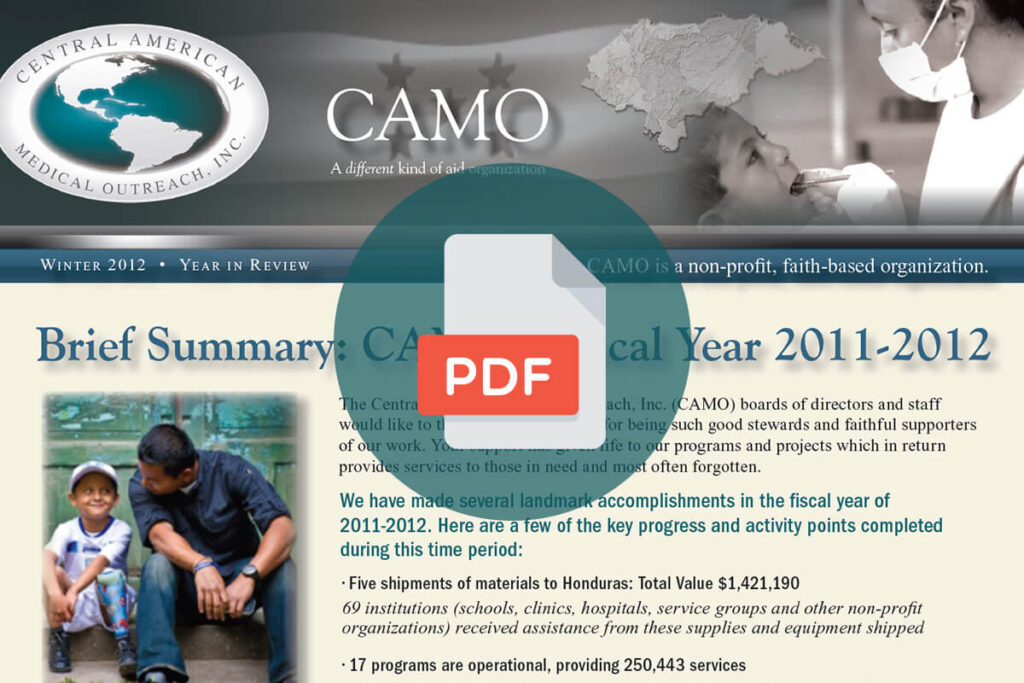
End of year 2011-2012

The Central American Medical Outreach, Inc. (CAMO) boards of directors and staff would like to thank all of our donors for being such good stewards and faithful supporters of our work. Your support has given life to our programs and projects which in return provides services to those in need and most often forgotten.

Quarterly

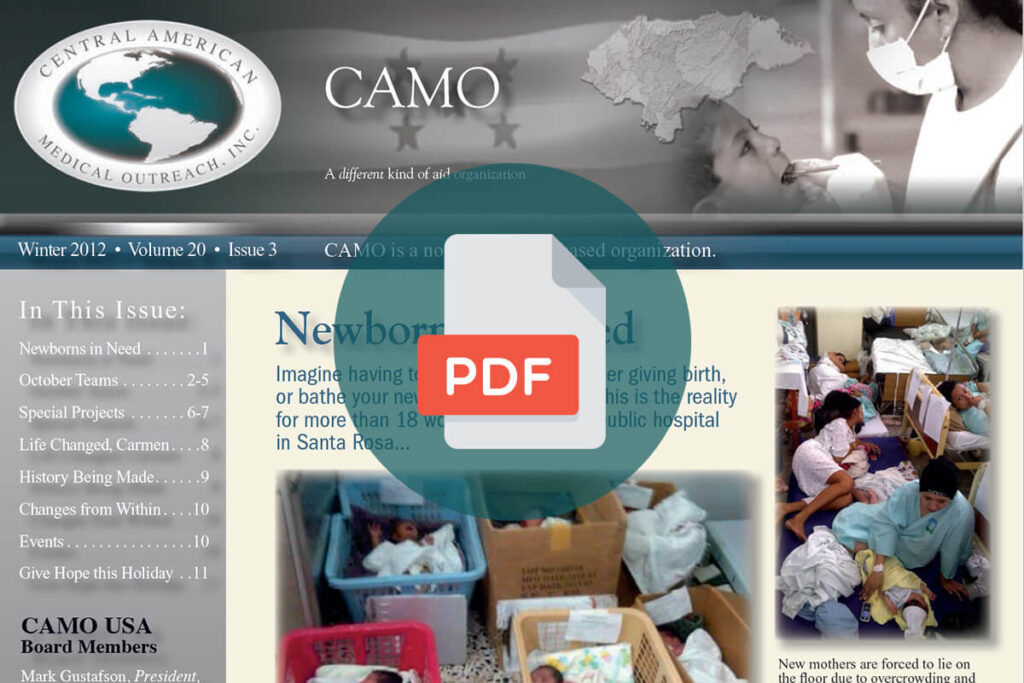
Winter 2012

It was my first baby, so I did not know what to expect. I was in labor and they had only checked me twice. When they found I had preeclampsia they did a C-section. After the surgery, I did not go to the recovery room, but went straight to a ward with 30 other women. Since I’d had a C-section, they allowed me my own bed for one night, but the next day I was in a bed with my baby, another woman and her baby.

Quarterly

Spring 2012

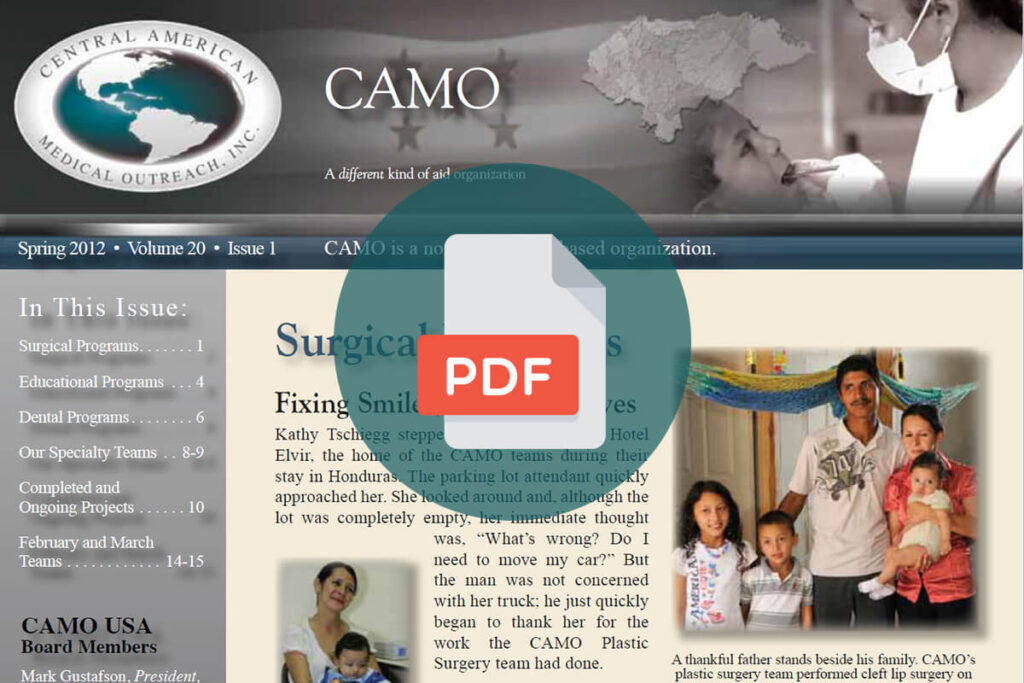
Fixing Smiles, Changing Lives – Kathy Tschiegg stepped out of her truck at Hotel Elvir, the home of the CAMO teams during their stay in Honduras. The parking lot attendant quickly approached her. She looked around and, although the lot was completely empty, her immediate thought was, “What’s wrong? Do I need to move my car?” But the man was not concerned with her truck; he just quickly began to thank her for the work the CAMO Plastic Surgery team had done.

Quarterly

End of year 2010-2011

The CAMO boards of directors and staff would like to thank all of our donors for being good stewards and faithful supporters of our work. You have been instrumental in helping us to serve those who are in need and so easily forgotten. The following pages provide a brief look into the past year of CAMO’s work.

Quarterly

Winter 2011

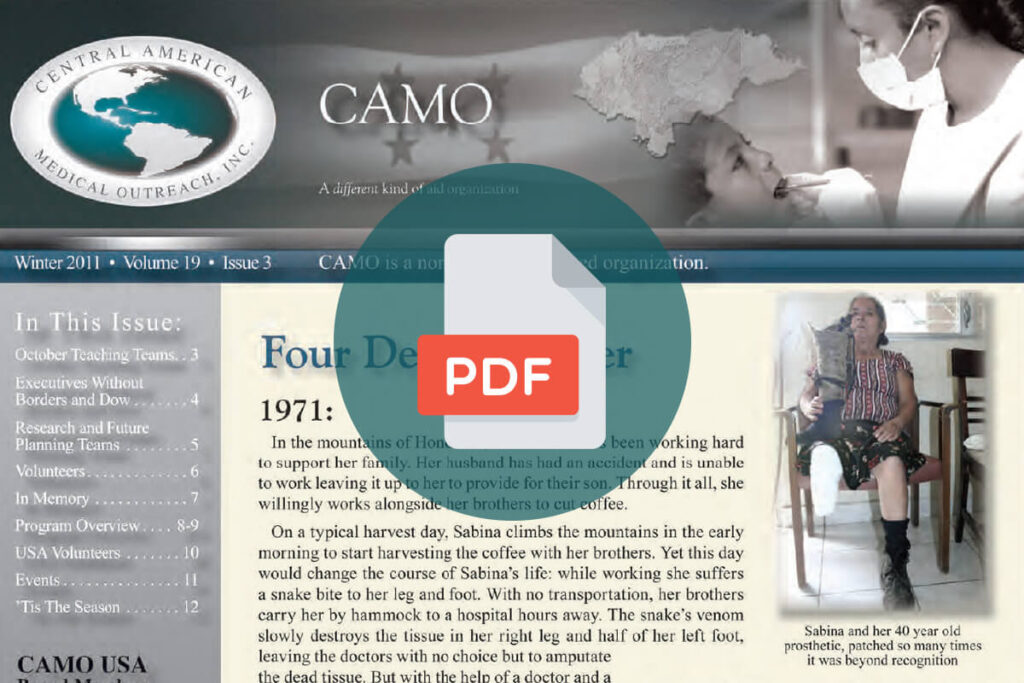
1971: In the mountains of Honduras, Mrs. Sabina has been working hard to support her family. Her husband has had an accident and is unable to work leaving it up to her to provide for their son. Through it all, she willingly work alongside her brothers to cut coffee. On a typical harvest day, Sabina climbs the mountains in the early morning to start harvesting the coffee with her brothers. Yest this day would change the course of Sabina’s life: while working she suffers a snake bit to her leg a foot.

Quarterly

Fall 2011

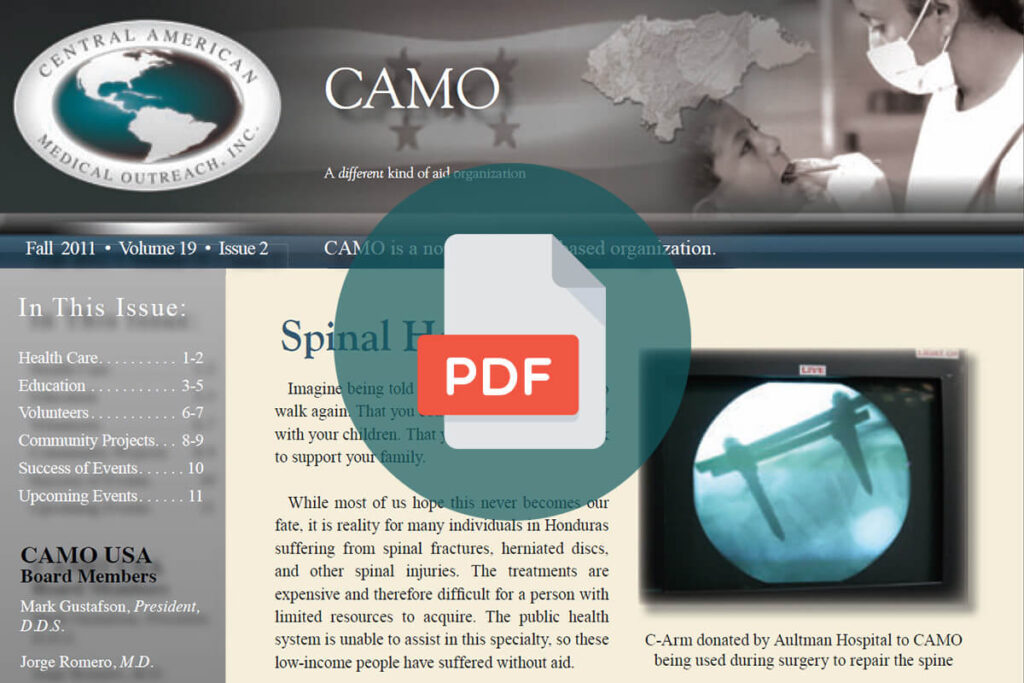
While most of us hope this never becomes our fate, it is reality for many individuals in Honduras suffering from spinal fractures, herniated discs, and other spinal injuries. The treatments are expensive and therefore difficult for a person with limited resources to acquire. The public health system is unable to assist in this specialty, so these low-income people have suffered without aid.

Quarterly

Spring 2011

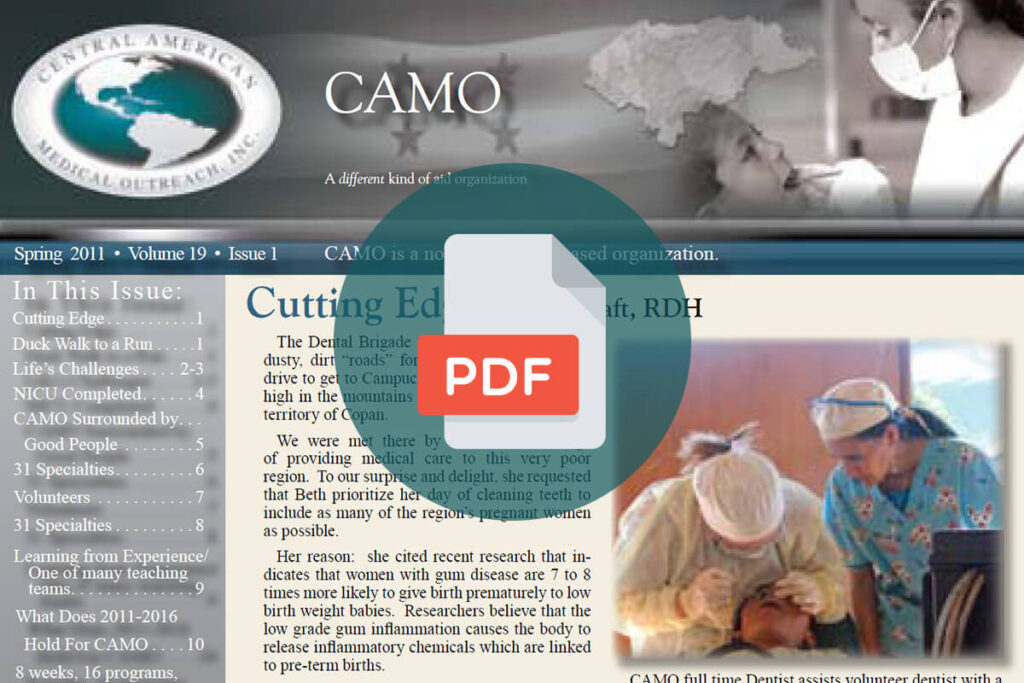
The Dental Brigade traveled narrow, winding, dusty, dirt “roads” for over half of our 2 hour drive to get to Campuca, a small isolated village, high in the mountains of Gracias, a neighboring territory of Copan. We were met there by the nurse in charge of providing medical care to this very poor region. To our surprise and delight, she requested that Beth prioritize her day of cleaning teeth to include as many of the region’s pregnant women as possible.

Quarterly

Winter 2010

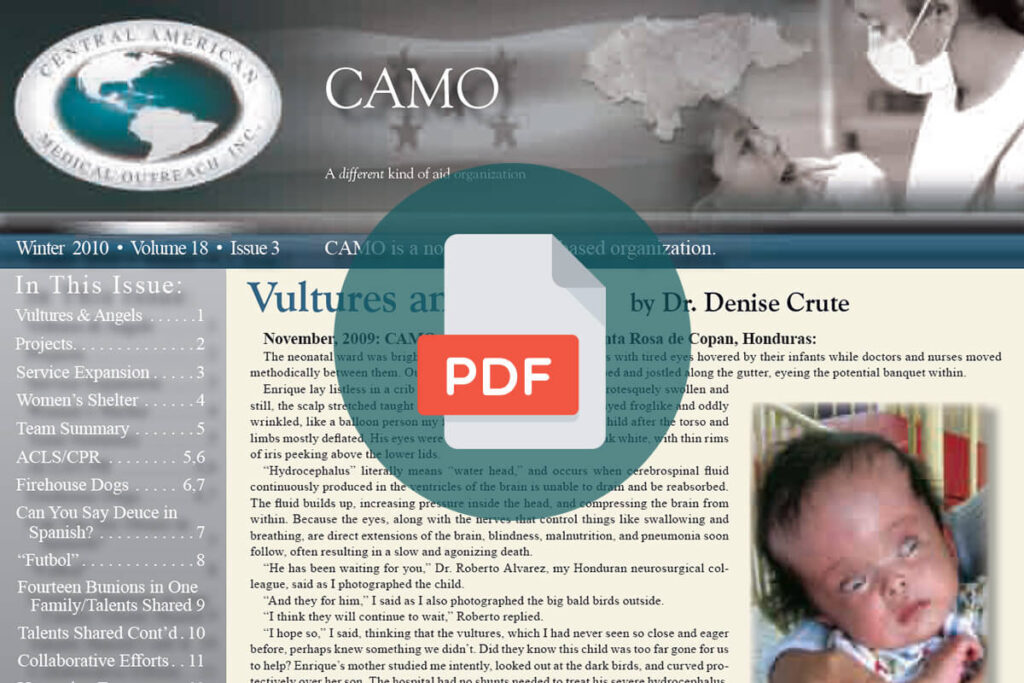
Enrique lay listless in a crib by the far window. His head was grotesquely swollen and still, the scalp stretched taught and shiny. His tiny arms and legs layed froglike and oddly wrinkled, like a balloon person my father made me when I was a child after the torso and limbs mostly deflated.

Quarterly

Summer 2010

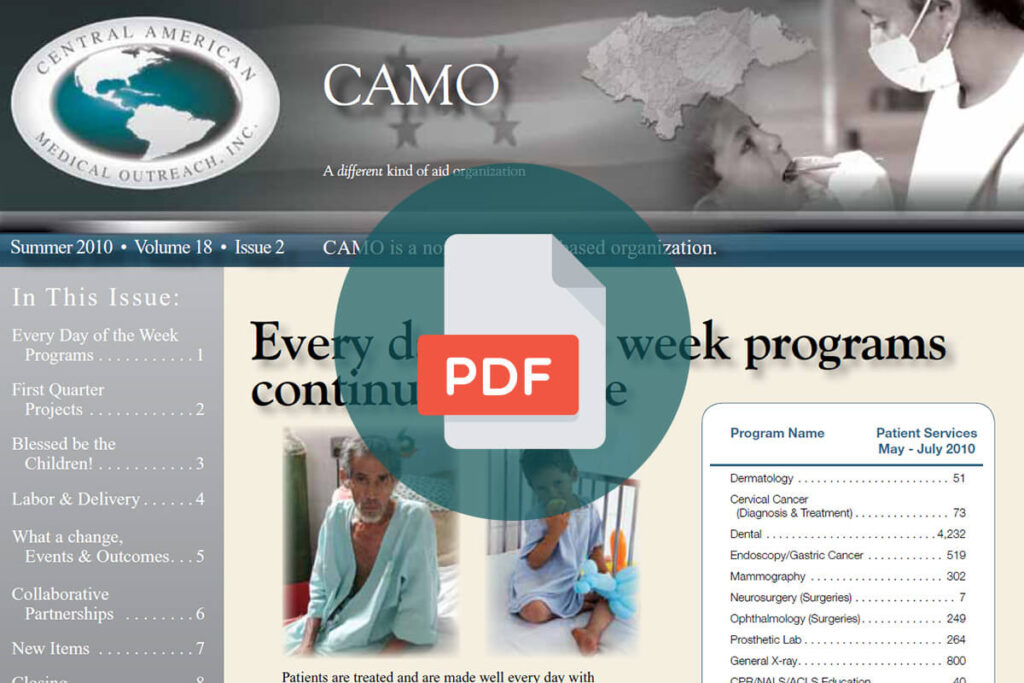
Everywhere you turn, people are speaking about how poor the economy is for businesses and unemployment in the USA. I am aware of this. Still, I see the disparity of what we call poverty and what poverty truly is. I hope that we can all keep our perspective and not allow our tightening of the belt to hurt those who could possibly lose their only access to care.

Scroll to Top