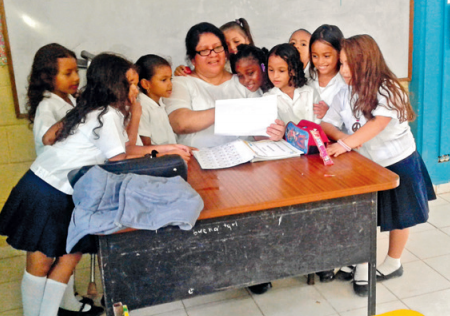
Ibeth, 58 years old, loved teaching, but in early 2017 she lost her leg and was given a prosthetic leg.
The director of the elementary school felt she could not do her job with a prosthetic limp and removed her from the classroom, giving her secretarial duties away from the children and environment she loved. With each day, her self-worth and confidence fell, until she reached out to CAMO’s prosthetic lab for help this October. After ensuring the physical fit of the limb was good, Mark Gorman (counterpart of the prosthetic lab since 1997) began to address the emotional fit. From his years of experience, he was able to give advice and train his Honduras counterpart, prosthetic technologist Carlos Cortez, on many new but daily situations Ibeth faced: how to confront the overt biases from the director of the school and community and, more importantly, how to reclaim her self-confidence. He suggested dancing—it trains the body in balance and natural movement. Mark and Carlos encouraged her to dance with her son and we have received reports she is dancing —and has gained confidence in her movements. She is back as a teacher. A life changer!